

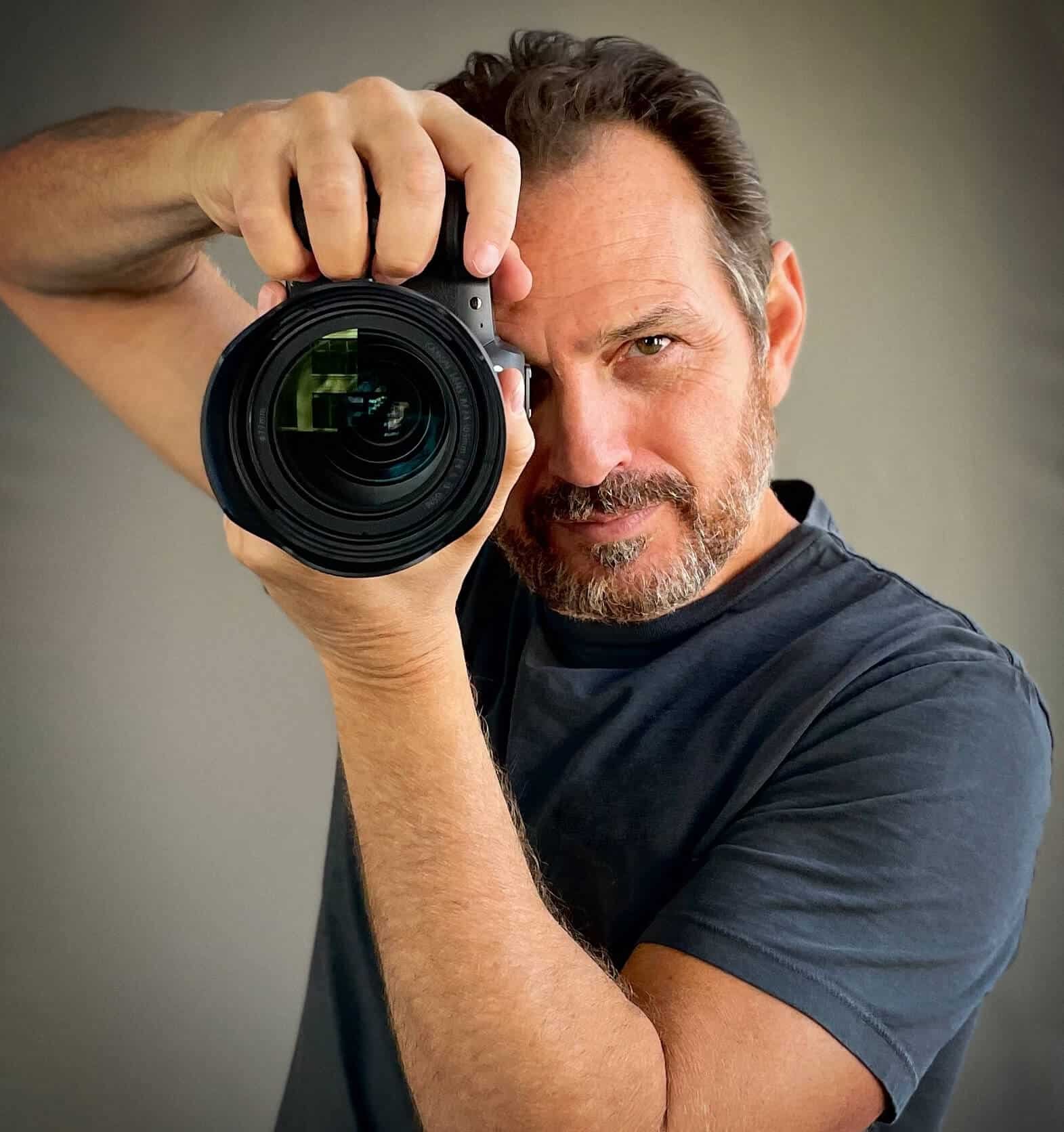
You know the look. Dark background, stiff posture, expression somewhere between serious and uncertain, lighting that flattens the face rather than sculpts it. For twenty years, this was the default corporate headshot, not because it was good, but because it was the established convention and no one questioned it.
That convention is over. What replaced it is not a trend that will cycle back or a stylistic preference that varies by taste. It’s a genuinely better standard of professional photography, grounded in how light works, how human faces register on camera, and how professional images are now evaluated in a world where your headshot is visible to thousands of people simultaneously. Understanding what changed, and why, helps you make a better decision about your own image.
What “Modern” Actually Means in Corporate Headshot Photography
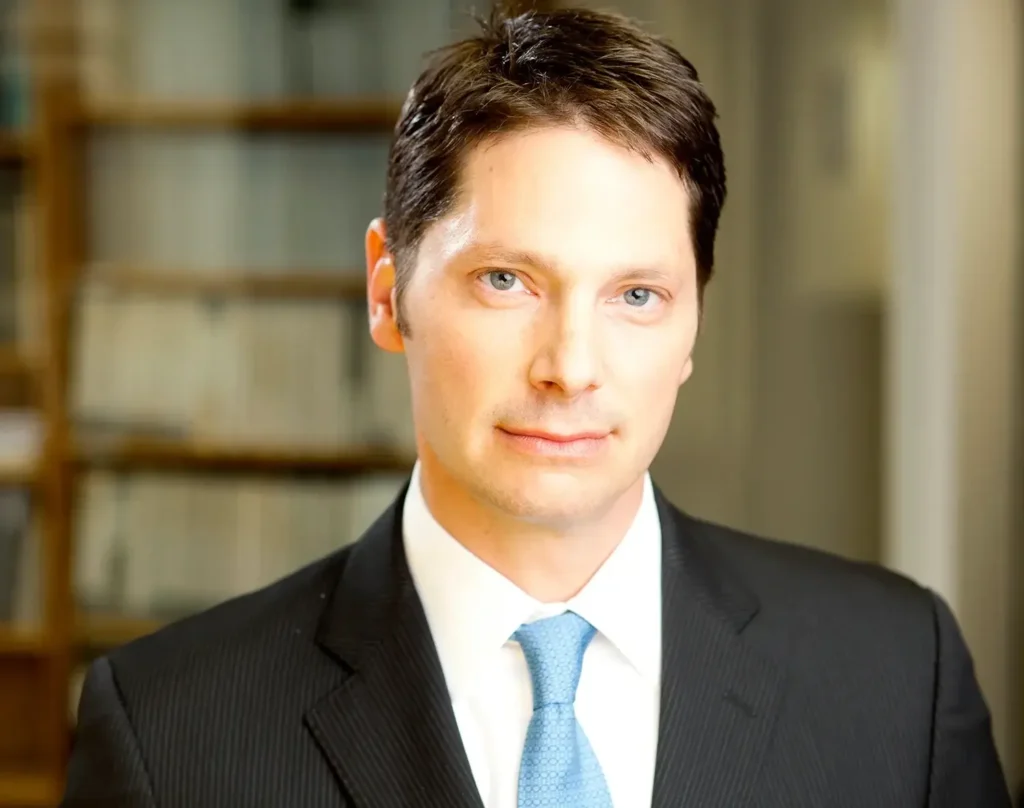
Modern corporate headshots have moved away from the stiff, dark-background studio look that dominated professional photography for decades. Today’s standard emphasizes natural lighting or soft studio light, genuine expression over posed formality, and backgrounds that are clean without being cold. The result is an image that looks like a person at their professional best, not a person trying to look professional.That distinction is the whole point. The old standard produced images that read as professional performances. The new standard produces images that read as professional people.The Shift That Happened, and When
The transition happened gradually between roughly 2015 and 2020, and it was driven less by photographers changing their approach than by LinkedIn and similar platforms making professional photography publicly comparable at scale for the first time.When your headshot appears in a search result next to dozens of others, the conventions that made a photograph look “corporate” in an isolated context suddenly become visible as conventions, not quality. A dark gradient background that read as serious and professional in 2005, displayed alongside a hundred other dark gradient backgrounds, reads as dated. The repetition exposed the formula.At the same time, the professional context in which headshots are used expanded significantly. A headshot is no longer just a formal photograph for a company directory, it’s on LinkedIn, on a personal website, in press features, in speaking bureau profiles, in email signatures, and in social media profiles. The image needs to work across all of those contexts simultaneously, which the old studio formula was not designed to do.5 Things That Define a Modern Corporate Headshot
The shift from the old standard to the current one is concrete and describable. It’s not about aesthetic preference, it’s about specific technical and stylistic decisions that produce measurably different results.| Element | Old standard | Modern standard |
| Background | Dark gradient, grey-brown or blue-grey | Neutral light or warm white · occasionally contextual |
| Lighting | Hard frontal · flat · no depth | Soft and dimensional · natural or sculpted studio light |
| Expression | Neutral or forced · “serious” at the expense of everything else | Natural · genuine eye contact · warmth without artificiality |
| Posture | Rigid · shoulders perfectly square · tense | Natural · slightly open · present without stiffness |
| Retouching | Heavy · “plastic” skin · anonymizing | Light · preserves character · invisible |
| Clothing | Dark suit as universal default | Industry-appropriate · reflects personality and role |
| Framing | Strictly shoulder-cropped · head centered | More breathing room · variable framing |
| Overall tone | Formal and distanced | Confident and approachable simultaneously |
Why Lighting Changed Everything
The single most technically significant change in modern corporate headshot photography is the shift from hard frontal lighting to soft dimensional lighting, and it’s worth understanding what that actually means.Hard frontal lighting means light sources placed directly in front of the subject, often from both sides simultaneously, eliminating shadows. The intention was to produce a clean, evenly lit image. The result was a face with no depth, the same quality of light falling on every surface, which is not how human faces look under any natural or ambient light condition. The photograph looked like a face, but not like a face in space. Two-dimensional, flat, slightly unreal.Soft dimensional lighting, whether from a large diffused studio source, a window, or a carefully placed reflector, creates depth by allowing some surfaces of the face to receive more light than others. The light falls from a direction, the way light actually falls. This produces shadows in the right places and highlights in the right places, which is what makes a face look three-dimensional in a photograph. It’s not a stylistic choice, it’s a more accurate representation of how a person actually looks.The difference between these two lighting approaches is visible immediately to anyone who looks at the two types of images side by side. The dimensionally lit image looks like a person. The flat, hard-lit image looks like a photograph of a person.Why Expression Standards Changed
The professional expectation for how a headshot subject should look has shifted substantially, and the reason is largely cultural rather than technical.The old formula equated professional seriousness with emotional restraint. A “serious” expression, neutral, controlled, closed, was read as appropriately professional. Warmth or genuine expression was read as insufficiently formal, or even as unprofessional.That equation no longer holds. In 2026, a corporate leader whose headshot communicates coldness and inaccessibility is not projecting authority, they’re projecting a kind of professional brittleness that reads as less trustworthy rather than more. Research on how professional images are evaluated shows consistently that images that communicate both competence and warmth outperform images that communicate only one of the two. Authority is not undermined by approachability. It’s amplified by it.The modern standard for expression is not a smile, it’s a quality of genuine presence. Eye contact that suggests the subject is actually looking at someone rather than staring through a lens. An expression that registers as alive and engaged rather than held and performed. This is harder to produce than a neutral expression, because it requires actual direction rather than the instruction to “look professional.” But it produces images that work significantly better across every professional context.Why Heavy Retouching Went Out of Style
The heavy retouching aesthetic of the 2000s, poreless skin, completely uniform tone, the absence of any texture that would indicate a real human face, is now immediately identifiable as dated and immediately undermining the image’s purpose.The purpose of retouching in a professional headshot is to ensure the image represents you at your best, not to transform you into someone else. Removing a temporary blemish, correcting dark circles from a poor night’s sleep, smoothing an area of uneven tone: these are appropriate and serve the image. Eliminating every pore, flattening every texture, and producing a skin surface that no human being actually has: this is visible to anyone who looks carefully and registers as dishonest.The modern retouching standard is light and invisible. When it’s done correctly, you cannot identify it as retouching, you can only note that the person looks very good. The character of the face, the specific qualities that make a person recognizable and human, are preserved. The image looks like them, at their best. Not like a smoothed approximation of them.What Makes a Headshot Look Outdated in 2026
One of the most useful functions of understanding what the modern standard looks like is being able to evaluate your current headshot against it. Here are the six most reliable indicators that a headshot belongs to another era.The 6 Signs Your Headshot Belongs to Another Era
- A dark gradient background. The blue-grey or brown-grey gradient that “glows” behind the shoulders was the studio default for roughly fifteen years. If your background graduates from darker at the edges to slightly lighter behind your head, your headshot is communicating a date range as clearly as a timestamp.
- Flat, hard frontal lighting. If your face has no shadows, if the light falls identically on your forehead, the sides of your face, and your chin, the image was lit with hard frontal sources. The result looks flat. You can see this most easily by looking at whether there’s any dimensionality to the face in the image.
- A rigid, squared-off pose. Shoulders perfectly parallel to the camera, head centered exactly in the frame, body locked into position. This was the default instruction given by photographers using the old formula, because it was predictable. It also looks exactly as mechanical as it is.
- Heavy retouching. Skin without any texture. A face that looks like it was rendered rather than photographed. This is particularly visible around the nose and forehead, where skin texture is normally most apparent.
- The “trying to look serious” expression. A neutral expression that reads as tense rather than confident, the result of a person being told to look professional without being given any direction about how to do that. You can see it in the eyes: they’re present but not engaged.
- The clothing and hairstyle. This one is subjective and shifts over time, but the principle is simple: if the image allows a viewer to place the year within three years based on styling choices alone, the image is dated. The clothing conventions of 2012 are identifiable as the clothing conventions of 2012.
Modern Corporate Headshots Across Different Industries
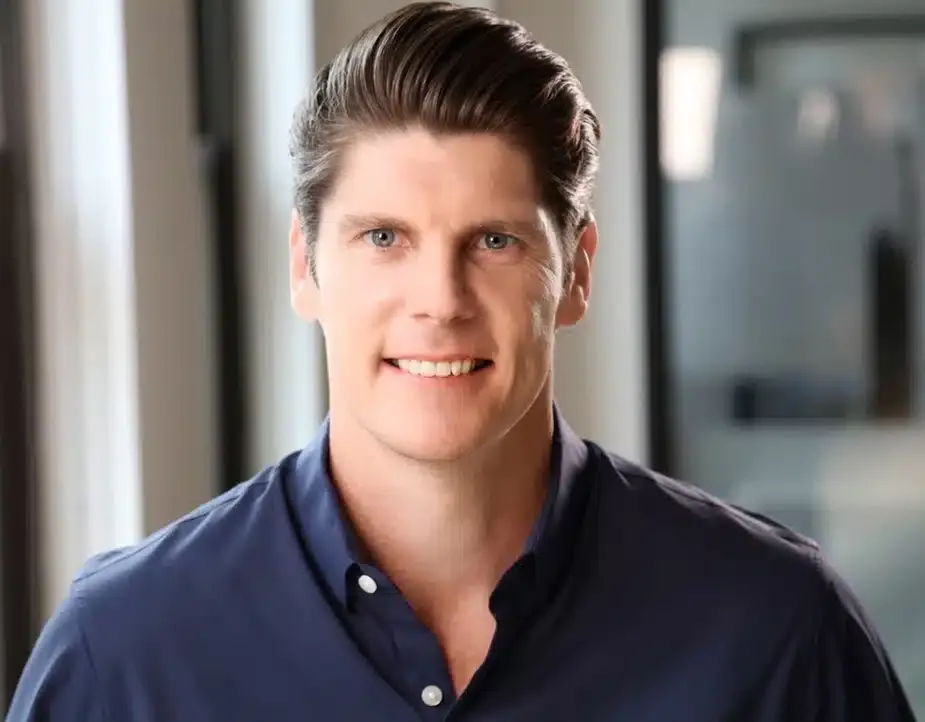
One of the most common misconceptions about the shift to modern corporate headshots is that “modern” means “casual.” It doesn’t. Modern means technically better, more authentically representative, and more carefully calibrated to the specific professional context, not less formal across the board.
Finance and Law, Modern Doesn’t Mean Casual
The professional conventions of financial services and legal professions remain formal. Dark, structured clothing. A neutral background. A direct gaze. A composed expression that communicates authority. These conventions haven’t changed, and updating your headshot to the modern standard doesn’t mean departing from them.
What changes is the lighting, the quality of the expression, and the retouching. A modern finance or legal headshot is still a dark suit on a neutral background, but it’s lit with depth rather than flatness, directed to produce genuine presence rather than posed formality, and retouched to look like the person rather than a smoothed approximation of them. The image is more formal than anything in tech or media, and it should be. But it looks like a photograph of a real person, which the old formula often didn’t.
Tech and Media, Where Personality Is the Asset
In technology, media, and creative industries, personality is a genuine professional differentiator, and the headshot is one of the primary places where it either shows up or doesn’t. The professional expectation in these industries has moved significantly toward authentic representation of who you actually are rather than who a corporate convention says you should look like.
This gives more latitude in almost every decision: clothing that reflects your actual professional identity rather than a uniform, an expression with more warmth and individual character, and sometimes an environment that adds context. An engineering lead at a Brooklyn tech company and a managing director at a Midtown investment bank should not have the same headshot, and in 2026, both of them know it.
Healthcare and Consulting, the Balance Point
Healthcare professionals and consultants operate in a context where both competence and warmth need to be visible simultaneously. Patients are choosing someone to trust with their physical health. Consulting clients are choosing someone to trust with significant business decisions. The headshot needs to communicate professional credibility without creating distance.
Modern lighting and genuine expression are particularly valuable in these industries, because they produce images that communicate human presence alongside professional authority. A doctor photographed with soft dimensional lighting and a natural expression reads as more approachable and trustworthy than the same doctor photographed under the old formula, and that difference is measurable in the professional relationships that headshot creates.
Studio vs. On-Location for a Modern Look
Modern Studio Headshots, What They Look Like Now
The professional photography studio in 2026 is not the dark room with the gradient background and the ring light setup that defined the old formula. A modern professional studio uses controlled soft lighting from a single directional source or a carefully configured multi-source setup, neutral or warm white backgrounds that disappear into clean professionalism, and the ability to adjust and reproduce the setup precisely for each subject.
The result is technically consistent, visually clean, and genuinely versatile, an image that works at any size, in any context, without looking like it was designed for one specific use. Browse the in-studio corporate headshots gallery to see what this looks like in practice across different industries and individuals.
For most corporate and professional contexts, company websites, LinkedIn, legal directories, financial services profiles, press kits, a modern professional studio session produces the most versatile and durable result.
When On-Location Adds to the Modern Feel
For entrepreneurs, founders, consultants with a strong personal brand, and professionals in creative or non-traditional industries, an on-location session can add something a studio background cannot: context. A meaningful environment, your workspace, a specific NYC location that reflects your professional identity, a setting that communicates something about how you actually work, can strengthen the image by making it specific rather than generic.
The risk is a background that competes with the subject rather than supporting them. A great environmental background draws all of the visual attention to the person. A busy or distracting background draws attention away from them. The on-location corporate headshots gallery shows the range of what this looks like when it’s done well, and the studio vs. on-location guide covers how to make the right choice for your specific context.
Modern Corporate Headshots at Gorn Photo NYC
Gorn Photo’s approach to corporate headshot photography reflects the modern standard: soft dimensional lighting calibrated to each individual, active on-camera coaching that produces genuine expression rather than performed formality, and retouching that enhances without anonymizing.
Every session is led by Lev Gorn, with 20+ years of experience directing professional headshots for clients across every industry in New York City. The Midtown Manhattan studio at 45 W 34th Street, Studio 707 is purpose-built for professional portrait photography, not a rented space or a pop-up setup, but a permanent professional environment where the lighting and backdrop configuration can be adjusted and reproduced with precision.
Individual sessions range from the LinkedIn Headshot package through to the Deluxe Corporate session at $1,050, which includes two outfits, a professional makeup and hair artist on set, and two professionally retouched images delivered the same day. For entrepreneurs and personal brand clients whose images need to work across multiple contexts, the On-Location Business Portrait ($1,750) and CEO Portrait ($2,995) packages are designed specifically for the range and depth that personal brand photography requires.
For a full overview of what each package includes and current pricing, visit the corporate headshots packages and rates page. For a complete pricing breakdown including what drives the cost at each level, the corporate headshot pricing guide covers it in full.
The Standard Has Changed, Your Image Should Reflect It
The old corporate headshot formula produced images that looked like corporate headshots. The modern standard produces images that look like people, specific, present, professional people whose image communicates something true about who they are and how they work.
That shift happened for good reasons, and it isn’t reversing. An image produced under the old formula communicates something to every person who encounters it, not just that the photograph is dated, but that the subject hasn’t updated their professional image to reflect where they are now. In a competitive professional environment, that signal matters.
Reach out to Gorn Photo to schedule your session and produce an image that reflects the current standard, and the current you.